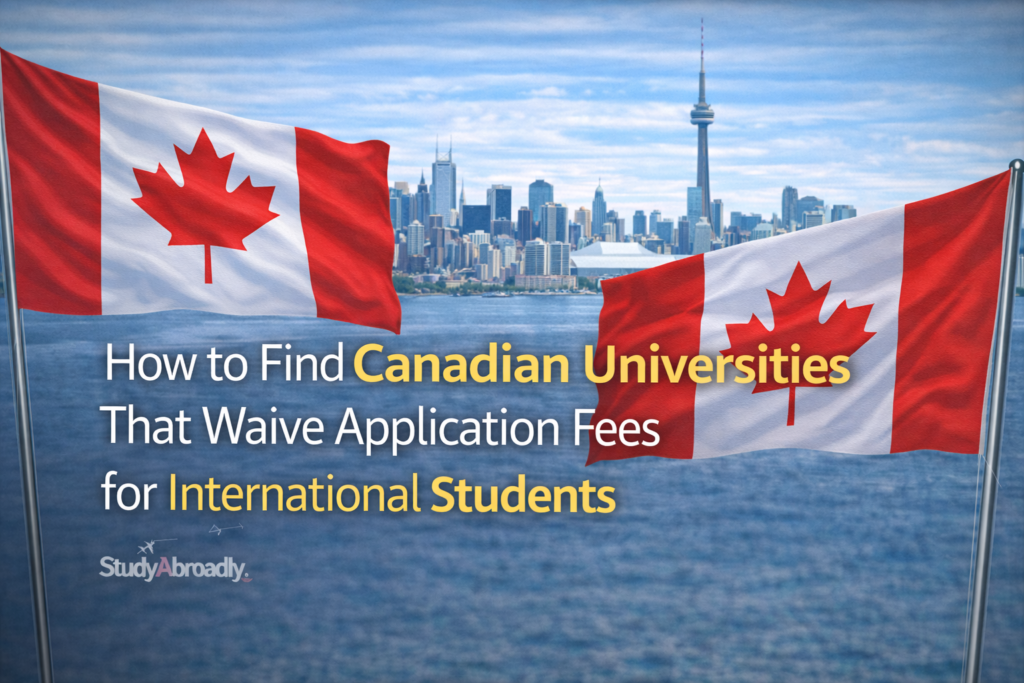
Every application fee adds up. You’re applying to five Canadian universities at CAD $150 each. That’s CAD $750, roughly ₦850,000 at current exchange rates. Before you’ve even been admitted anywhere, before you’ve paid tuition deposits or visa fees, you’ve spent money equivalent to several months of income for many Nigerian families. And if all five reject you, that money is simply gone. It’s worth your time to research Canadian universities that waive application fees for international students, as those savings can really add up when you’re applying to multiple schools.
Application fees serve a dual purpose: they offset administrative costs and, more importantly, act as a barrier to non-serious applicants. Universities know that free applications attract thousands of unqualified applicants, overwhelming admissions offices. Charging fees filters out less serious candidates.
However, some Canadian universities recognize that application fees create barriers for qualified international students from low-income countries. These institutions waive fees strategically, either for all applicants, for students from specific countries, for attendees of recruitment events, or for graduate programs where they want to attract top talent regardless of financial circumstances.
Finding these fee waivers requires research, timing, and sometimes meeting specific conditions. Universities don’t always advertise waivers prominently. Some are automatic based on citizenship or program level. Others require attending webinars, requesting waivers directly, or applying during promotional periods. Finding and using fee waivers isn’t just about saving a few dollars. For many, it’s the difference between applying to a dream school or being forced to skip it entirely.
Universities with Automatic Fee Waivers Based on Citizenship
University of British Columbia (UBC) automatically waives graduate program application fees for citizens of the United Nations’ 50 least-developed countries. This list includes several African nations such as Ethiopia, Democratic Republic of Congo, Uganda, Tanzania, and others, though notably not Nigeria.
Nigerian students don’t qualify for UBC’s automatic waiver based on citizenship. However, UBC occasionally provides waivers for other reasons including exceptional academic merit, specific scholarship programs, or financial hardship demonstrated through direct requests to admissions offices. If you’re from one of the UN’s least-developed countries, UBC’s automatic waiver applies to all graduate programs across faculties. You don’t need to request it separately; the system recognizes your citizenship during application and removes fees automatically.

Universities Waiving Fees for Recruitment Event Participants
University of Guelph provides undergraduate application fee waivers for Fall 2026 intake to international high school students who attend specific virtual recruitment webinars and meet admissibility requirements. This approach rewards students who engage seriously with the university’s recruitment efforts.
Guelph’s webinars provide information about programs, campus life, admission requirements, and application processes. Attendees who meet basic admissibility criteria receive fee waiver codes applicable to their applications. This benefits both university and students: Guelph identifies engaged prospective students, while students save application costs.
To access Guelph’s waiver, monitor their international admissions website for webinar schedules, register promptly as spaces may be limited, attend the full session, and follow instructions for receiving waiver codes. These codes typically have expiration dates and specific application windows.
University of New Brunswick (UNB) similarly waives fees for international students attending Canadian high schools or those participating in pre-registered recruitment events between September 1, 2025, and March 31, 2026. UNB’s recruitment events occur globally, including virtual sessions accessible from Nigeria.
The strategy here is clear: universities use fee waivers to incentivize participation in recruitment activities where they can assess student quality, explain programs, and build relationships with prospective applicants. These virtual info sessions are a low-effort way to gather important details that can help you avoid mistakes and find ways to reduce the overall expense of your studies.
Institutions with Zero Application Fees for All Students
Quest University in British Columbia charges no application fees for any applicants, domestic or international. This small liberal arts university maintains open application policies making it accessible financially at the application stage. Quest’s educational model focuses on block scheduling where students take one intensive course at a time rather than multiple concurrent courses. The lack of application fees removes barriers for students interested in exploring this alternative educational model.
Redeemer University in Ontario similarly provides free applications for all candidates. Redeemer is a Christian liberal arts university with explicit faith-based mission. Students should understand Redeemer’s religious character before applying, but the free application allows exploring the option without financial commitment.
Fairleigh Dickinson University (FDU) provides a $50 application fee waiver for all first-time applicants who apply directly through their website, providing benefits like an accelerated decision and maximum scholarship consideration, making the application process easier. FDU Vancouver is a private American university with Canadian campus, providing American degrees in Canadian setting. The fee waiver makes FDU Vancouver accessible for students interested in American educational models delivered in Canada.
Colleges and Special Circumstances: Canadian Universities That Waive Application Fees for International Students
Centennial College in Toronto charges no application fees for international students who already reside in Canada with valid study permits. This targets students already studying in Canada at other institutions who want to transfer or pursue additional credentials. For Nigerian students currently in Canada on study permits who are considering transferring or pursuing college diplomas after completing other programs, Centennial’s free application removes financial barriers to exploring options.
Royal Roads University in British Columbia provides fee waivers through specific scholarship programs and funding mechanisms. Royal Roads specializes in professional and continuing education, particularly at graduate level. Waivers connect to specific funding opportunities rather than universal policies.
University of Winnipeg frequently conducts promotional periods waiving fees for international students. These promotions are time-limited and often tied to specific recruitment campaigns or enrollment goals. Monitoring Winnipeg’s admissions site is the best way to catch those waiver opportunities the moment they drop
How to Secure Fee Waivers in Nigeria
Even if a school doesn’t have an official “free application” button on its website, you can often talk your way into a waiver if you’re smart about it.
- Attend virtual recruitment events hosted by Canadian universities even when fee waivers aren’t explicitly promised. Universities sometimes provide waiver codes to engaged participants as incentives. Track Canadian university recruitment schedules, particularly virtual events accessible from Nigeria.
- Check third-party educational organizations. Some organizations occasionally reimburse application fees (up to CAD $120) for students applying through their services to partner institutions during specific promotional periods.
- Email graduate admissions offices directly explaining your qualifications and financial circumstances. Graduate programs, particularly PhD programs looking for top candidates, sometimes waive fees for exceptionally qualified applicants or those demonstrating genuine financial hardship. This approach works better for graduate programs than undergraduate admissions.
- When requesting waivers directly, be professional and specific. Explain your academic qualifications, genuine interest in the program, and financial circumstances preventing fee payment. Don’t send generic requests to dozens of universities; personalize communications demonstrating you’ve researched the program.
- Monitor university social media and international student recruitment communications. Universities occasionally announce limited-time promotions including fee waivers through these channels.
- Leverage your network. If you know a professor at the school or a current Nigerian student leader there, ask if they have “referral” codes. Some universities give these to their community to help recruit talented peers.
Required Documents Regardless of Fee Waivers
Even when application fees are waived, you must still provide complete application materials meeting admission requirements.
- Academic transcripts from all previous education must be submitted, typically as certified copies. Canadian universities require official transcripts sent directly from issuing institutions or certified by appropriate authorities.
- English language proficiency test scores are mandatory unless you completed previous education entirely in English at recognized institutions. IELTS, TOEFL, or PTE scores must meet minimum requirements varying by university and program.
- Statement of Purpose (SOP) or personal essays explain your academic interests, career goals, reasons for choosing the specific program and university, and how your background prepares you for success. SOPs must be genuine, specific, and well-written.
- Letters of Recommendation, usually two to three, should come from professors, teachers, or employers who know your work well and can speak specifically to your abilities and potential.
- Some programs require additional materials such as portfolios for creative programs, resumes or CVs, research proposals for graduate programs, or prerequisite course completions.
Fee waivers remove the upfront cost of applying but don’t change admission standards. You still need competitive academic profiles, test scores, and application materials. The waiver simply removes the financial barrier to submitting applications.
StudyAbroadly: Best Consultancy to Study in Canada
Application fees are just one expense in the complex, costly process of applying to Canadian universities. Beyond application fees, you face English test costs, document certification fees, transcript request fees, and credential evaluation costs if required. StudyAbroadly helps Nigerian students minimize application expenses while maximizing admission chances. We track which Canadian universities currently waive fees, upcoming recruitment events that provide waiver codes, and strategies for requesting waivers directly.
StudyAbroadly guides strategic application planning, helping you identify realistic target universities where your profile is competitive. This prevents wasted application fees on universities where admission chances are minimal. We also handle complete application preparation including statement of purpose development, ensuring your SOP is compelling and specific. We coordinate recommendation letter requests, verify transcript authenticity requirements, and manage application timelines ensuring nothing is missed.
Many Canadian universities provide entrance scholarships to international students, and some scholarships include application fee reimbursements. Knowing which scholarships to pursue and how to apply can dramatically reduce total costs.
Application fee waivers save money, but successful Canadian applications needs competitive profiles, complete documentation, and strategic planning. The combination of fee waivers, scholarship opportunities, and expert guidance makes Canadian education accessible to qualified Nigerian students, especially those whose families can’t afford to gamble hundreds of thousands of Naira on application fees alone.