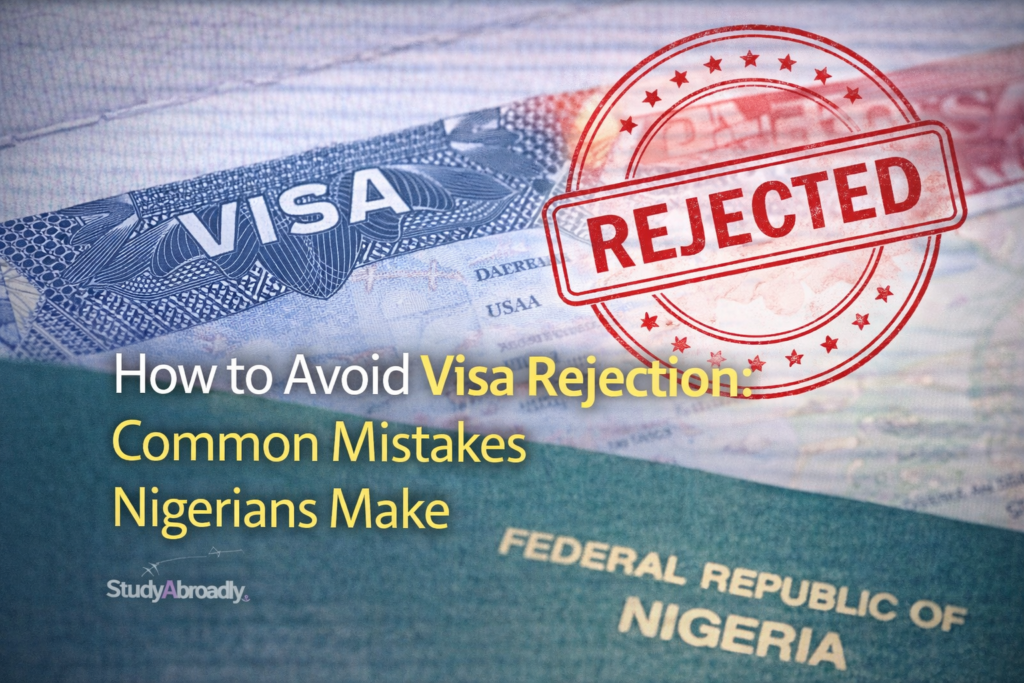
Visa rejection is one of the most devastating experiences in the study abroad journey. You’ve spent months researching universities, crafting applications, securing admission offers, paying deposits, and planning your future. Your family has mobilized savings, perhaps sold assets or arranged loans. Then the email arrives: “We regret to inform you that your visa application has been refused.” In that moment, everything collapses. The financial investment is lost, the academic opportunity disappears, and the emotional toll on both student and family is profound.
Nigerian students face higher visa rejection rates compared to applicants from many other countries, particularly for destinations like the UK, Canada, and the United States. This isn’t because Nigerian students are less qualified or less genuine. It’s because specific patterns of errors, misunderstandings, and inadequate preparation plague Nigerian applications, triggering refusals that could have been prevented with proper knowledge and guidance.
Visa officers aren’t arbitrarily rejecting applications. They’re following specific criteria and looking for particular red flags that indicate potential immigration violations, fraudulent documents, or applicants who don’t genuinely intend to study. Understanding what triggers these red flags and how to avoid them dramatically improves approval chances. This guide identifies the most common mistakes Nigerian students make in visa applications across major study destinations and provides actionable strategies to prevent them.
Insufficient or Improperly Documented Financial Proof
The most frequent cause of visa rejection for Nigerian students is inadequate financial documentation. Every major study destination requires proof that you can afford tuition and living expenses without working illegally or accessing public funds. However, many Nigerian applicants misunderstand what constitutes acceptable proof.
For UK student visas, you must demonstrate funds covering first-year tuition plus £1,529 per month for London or £1,171 per month elsewhere for up to nine months. These funds must be held in a bank account for 28 consecutive days, and the bank statement must be dated no more than 31 days before your visa application.
Common mistakes include showing funds for only a few days before application, using statements older than 31 days, presenting funds in parents’ accounts without proper consent letters and relationship proof, or showing investments, property, or cryptocurrency rather than accessible cash.
Canadian study permits require approximately CAD $22,895 beyond tuition for living expenses (higher amounts apply for Quebec or for accompanying family members). The funds must be readily available, clearly documented, and from legitimate sources. Visa officers typically require four months of bank statements to demonstrate consistent balances over time, as sudden large deposits immediately before applications raise suspicion of money that suddenly appeared.
To avoid this mistake, plan early. Ensure required funds are deposited and maintained in appropriate accounts for required periods before applying. Use personal accounts or parents’ accounts with proper authorization letters. Get official bank statements on letterhead with bank stamps and signatures. Don’t show borrowed money deposited briefly for statement purposes; officers recognize this pattern.
Unconvincing Study Plans and Career Narratives
Visa officers assess whether you’re a genuine student with legitimate study intentions or someone using student visas as immigration pathways without actual commitment to education. Vague, generic, or illogical study plans trigger rejections. For Canadian applications, the explanation letter or study plan must address why you chose Canada specifically, why the particular program makes sense given your educational background, how the program connects to your career goals, and crucially, why you’ll return to Nigeria after studies.
Many Nigerian students submit generic letters stating they “want quality education” or “chose Canada for better opportunities.” These tell officers nothing specific about genuine intentions. Worse, some students apply for programs completely unrelated to their previous education without explaining the change, or propose career plans that don’t logically connect to their chosen programs.
To avoid this mistake, craft specific, logical narratives. If you studied accounting in Nigeria and are pursuing accounting in Canada, explain how Canadian education adds specific skills or credentials valuable in Nigeria’s financial sector. If changing fields, explain why clearly and logically. Research your program thoroughly and reference specific courses, faculty, or opportunities that attracted you.
Address the return question honestly. Officers know many students hope to remain abroad after studies, but they want assurance you have ties to Nigeria and plans beyond just immigrating. Mention family businesses, career opportunities in Nigeria, or professional networks you’ll rejoin.

Poor Academic Progression or Unexplained Educational Gaps
Visa officers scrutinize whether your educational trajectory makes sense. Applying for programs below your current qualification level, changing fields without explanation, or having unexplained gaps in education history raises doubts about genuine student intentions.
A Nigerian applicant with a Bachelor’s degree applying for another Bachelor’s in an unrelated field appears suspicious unless compellingly explained. Similarly, someone with five-year employment gap suddenly applying for studies without explaining the gap and motivation creates doubts. UK visa officers particularly scrutinize academic progression. If your proposed program doesn’t represent logical advancement from previous education, explain why in your application. If you’ve been out of education for years, address this directly rather than hoping officers won’t notice.
To avoid this mistake, choose programs representing logical progression from your current education level and field. If changing directions, provide clear, honest explanations in your statement of purpose or explanation letter.
Using Fraudulent or Altered Documents
Document fraud is a severe issue that has damaged Nigerian applicants’ credibility with visa officers globally. Some applicants, often with assistance from unethical agents, submit altered bank statements, fake employment letters, forged academic certificates, or manipulated financial documents.
Visa officers have sophisticated verification methods and regularly detect fraudulent documents. Once fraud is discovered, not only is your current application rejected, but you may be banned from applying again for years. The ban can extend to other countries sharing immigration information.
This mistake is entirely avoidable through honesty. If your actual financial situation doesn’t meet requirements, either wait until you can legitimately demonstrate required funds or choose more affordable study options. Don’t allow agents to “help” by altering documents. The short-term gain of potential approval isn’t worth the long-term consequences of fraud detection.
Present only genuine, unaltered documents. If your circumstances aren’t ideal, address limitations honestly rather than fabricating better situations. Visa officers appreciate honesty and sometimes approve applications with minor weaknesses if overall credibility is maintained.
Inadequate English Language Proficiency or Incorrect Test Results
For English-speaking destinations, language proficiency is mandatory. However, some Nigerian students misunderstand requirements or submit incorrect test results, causing rejections. UK requires IELTS for UKVI (Academic) or other approved SELT tests. Taking regular IELTS instead of UKVI version results in automatic rejection regardless of scores. Similarly, taking tests at non-approved centers or submitting expired results (older than two years) causes refusals.
Some students assume that because Nigeria uses English in education, they’re exempt from language tests. While some universities waive language tests for students with good WAEC English grades, visa requirements may differ from university admission requirements. Verify visa requirements separately from university requirements.
To avoid this mistake, take the correct test version from approved centers. Ensure test results are current and scores meet minimum requirements for both university admission and visa approval. If exempt from tests, get clear documentation from the university confirming the exemption and check whether visa authorities accept this exemption.
Poor Interview Performance or Inconsistent Information
Some visa applications include interview components where officers assess credibility, intentions, and application consistency. Poor interview performance triggers rejections even when documentation appears adequate.
Common interview mistakes include providing vague or inconsistent answers, contradicting information in written applications, inability to explain study plans or chosen programs coherently, appearing to have memorized scripted responses rather than answering genuinely, or displaying nervousness that officers interpret as deception.
US student visa interviews are particularly challenging. Officers make quick decisions based on brief interviews, assessing credibility, intentions, and ties to Nigeria. Many qualified applicants fail interviews not because they lack eligibility but because they communicated poorly under pressure.
To avoid this mistake, prepare thoroughly but authentically. Practice common questions with someone who can provide honest feedback. Know your program details, university information, and study plans thoroughly enough to discuss them naturally, not recite memorized scripts. Be honest; if you don’t know something, say so rather than fabricating answers.
If nervous during interviews, acknowledge it naturally rather than trying to hide it. Officers understand interviews are stressful and won’t penalize genuine nervousness, but they will penalize evasive or inconsistent responses.
Incomplete Applications or Missing Documents
Rushing visa applications or failing to follow instructions carefully results in incomplete submissions that are rejected procedurally before substantive assessment. Every visa application provides detailed document checklists and requirements. Some applicants skip documents they find difficult to get, hoping officers won’t notice, or misunderstand requirements and submit incorrect documents.
To avoid this mistake, follow instructions meticulously. Create checklists from official government websites, not third-party sources. Verify every document meets specified requirements regarding format, dates, certifications, and content. If any required document is unavailable, contact visa authorities or get professional guidance rather than simply omitting it.
Double-check applications before submission. Have someone else review your application package to catch errors you might miss. Missing one required document can result in rejection regardless of how qualified you otherwise are.
How StudyAbroadly Helps Prevents Visa Rejections for Nigerians
At StudyAbroadly, we’ve guided hundreds of Nigerian students through successful visa applications across UK, Canada, US, and other destinations. We’ve seen every mistake that causes rejections and developed systems preventing them. We conduct thorough eligibility assessments before applications begin, identifying potential weaknesses in financial documentation, academic progression, or study plans. We address issues proactively rather than hoping visa officers overlook them.
We advise on proper financial documentation preparation, ensuring funds are held in correct accounts for required periods, statements are properly formatted and dated, and supporting letters meet requirements. We help families demonstrate legitimate funds without resorting to fraudulent documentation. We also craft compelling study plans and explanation letters that logically connect your background, chosen program, career goals, and return intentions.
Visa rejections are devastating but often preventable. Understanding common mistakes Nigerian students make and implementing proper prevention strategies dramatically improves approval chances. Success requires early planning, honest documentation, careful preparation, and often professional guidance from experienced consultants who understand visa requirements and Nigerian application challenges.