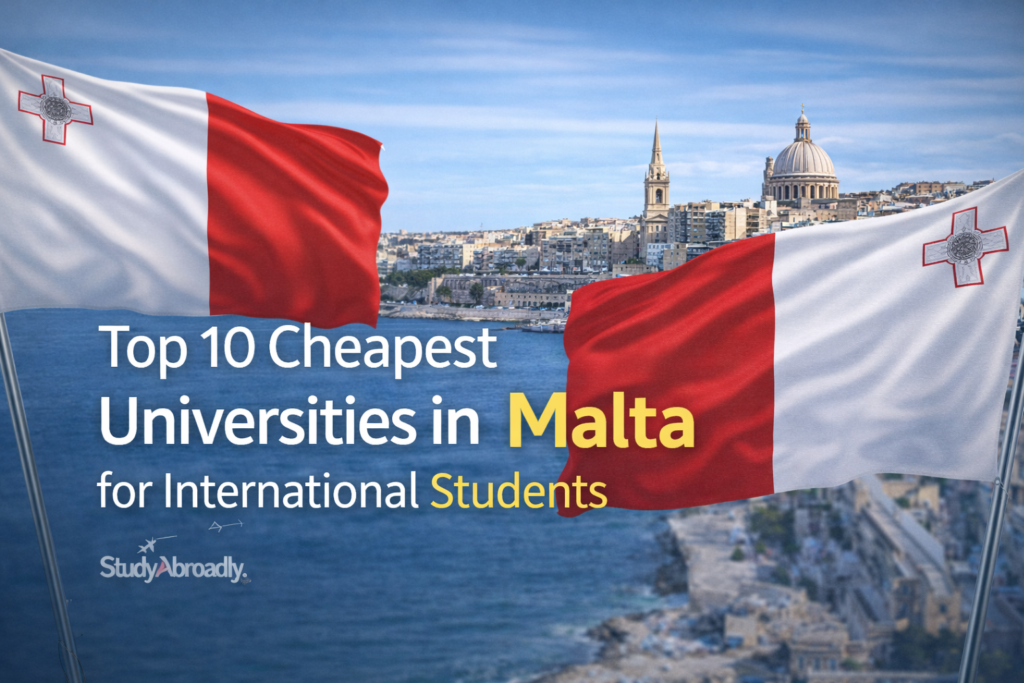
When Nigerian families talk about studying abroad, the same countries usually come up. The UK. Canada. The US. Sometimes Germany. Malta is rarely part of that conversation. Most people either overlook it or know very little about it. That is surprising, because this small Mediterranean island quietly offers several things international students care about.
Malta is an English speaking country, shaped by its history with Britain. For Nigerian students, this removes the language stress that often comes with destinations like Germany or France. Degrees earned in Malta are recognized across the European Union and beyond, which gives graduates flexibility after school. The country also feels welcoming, with a mix of European and North African influences, a warm climate, and a low crime rate.
Daily life in Malta is also more budget friendly than many popular study destinations. Rent, food, and transportation cost far less than what students pay in the UK, Ireland, or most of Northern Europe. On the academic side, Malta offers a mix of traditional universities and hands on vocational schools focused on real world careers. Tuition fees range from very affordable options under €2,000 per year to higher end programs around €12,000 to €15,000, still well below what most English speaking countries charge.
For students and families looking for quality education without extreme costs, Malta deserves a closer look. Let’s explore the 10 cheapest universities in Malta for international students, understanding what they offer, what they cost, and who they suit best.
Malta College of Arts, Science and Technology
Malta College of Arts, Science and Technology, commonly known as MCAST, is Malta’s leading vocational education institution. MCAST offers practical, career oriented programs rather than traditional academic degrees. Tuition fees for international students range from €1,800 to €9,000 annually depending on program level and field.
MCAST provides certificates, diplomas, and degrees in fields like engineering, IT, business, health and social care, hospitality, construction, creative arts, and agriculture. The teaching approach combines classroom learning with hands on training, workshops, and industry placements. Programs prepare you directly for employment rather than focusing solely on theory. Graduates find work in technical fields, hospitality industry, IT sector, and various trades.
The lower fee levels (€1,800 to €4,000) apply to certificate and diploma programs, while higher qualifications like advanced diplomas and degrees cost more, up to €9,000. Even at the higher end, this remains very affordable compared to universities in UK, US, or Australia.
University of Malta
University of Malta (UM) is the country’s main public university and oldest institution of higher learning, founded in 1592. Tuition fees for international students are reasonable, typically ranging from €4,000 to €12,000 annually depending on program and level.
University of Malta offers comprehensive programs across faculties including arts, science, engineering, law, medicine, economics, education, and social sciences. The university operates on European higher education standards, with Bachelor’s degrees typically taking three years and Master’s degrees one to two years. Programs are taught in English, making them accessible to Nigerian students. The university attracts students from across Europe, Middle East, Africa, and Asia, creating genuinely international campuses.
For Bachelor’s programs, fees typically range from €4,000 to €8,000 per year for most fields, with medicine and some specialized programs costing more, up to €12,000 annually. Master’s programs follow similar fee structures.
London School of Commerce Malta
London School of Commerce Malta (LSCM) specializes in business education, offering undergraduate and postgraduate programs in business management, accounting, finance, and related fields. Tuition fees are remarkably affordable, ranging from €2,500 to €5,000 annually.
LSCM partners with UK universities to offer degrees validated by British institutions, meaning you study in Malta but receive a UK degree. This arrangement provides British credential recognition at fraction of UK costs. Programs include BA in Business Management, MBA, and various specialized business qualifications.
Saint Martin’s Institute of Higher Education
Saint Martin’s Institute of Higher Education (SMI) focuses on computing and business programs with tuition fees ranging from €2,000 to €9,500 annually. SMI offers undergraduate and postgraduate degrees in fields like computer science, software development, business administration, and management.
Programs are validated by UK universities, providing British degree recognition. This partnership model allows students to study in Malta’s affordable environment while getting credentials recognized in UK, Europe, and globally. Business programs prepare students for management roles, entrepreneurship, or corporate careers in finance, marketing, operations, and human resources.
Global College Malta
Global College Malta (GCM) offers business and management programs with annual tuition fees ranging from €4,750 to €8,650. GCM provides undergraduate and postgraduate degrees in business administration, management, marketing, and related fields.
The institution partners with internationally recognized universities to validate degrees, ensuring qualifications are recognized beyond Malta. GCM attracts international students from diverse backgrounds, creating multicultural learning environments. For Nigerian students, this international exposure provides networking opportunities and cross cultural experience valuable in global business careers. Programs are designed for working professionals as well as full time students, with flexible scheduling options.

American University of Malta
American University of Malta (AUM) provides American style education in Malta, with tuition fees ranging from €5,000 to €15,000 annually depending on program. While at the higher end of Malta’s pricing, AUM remains cheaper than studying in the United States.
AUM offers programs in architecture, engineering, business, liberal arts, and health sciences. The American education model differs from European systems, with broader general education requirements alongside major specialization. For Nigerian students familiar with or interested in American education style, AUM provides that experience without US costs. The university’s accreditation and partnerships facilitate potential transfer to US institutions or recognition of AUM degrees in American contexts.
Informatics Institute of Technology Malta
Informatics Institute of Technology Malta (IITM) specializes in IT and engineering programs with remarkably low tuition fees ranging from €2,000 to €4,000 annually. This makes IITM one of Malta’s most affordable options for technical education.
IITM offers degrees in computer science, software engineering, information technology, and related fields. Programs combine theoretical computer science with practical programming, system design, and technology implementation skills. The institute maintains partnerships with UK universities for degree validation, providing British credential recognition alongside Malta based education.
Advenio eAcademy
Advenio eAcademy offers online and blended learning business degrees with tuition fees ranging from €3,000 to €5,000 annually. This institution suits students who want flexibility to study remotely or combine online learning with occasional on campus sessions.
Programs focus on business administration, management, marketing, and entrepreneurship. The online delivery model allows students to work while studying, managing their own schedules around employment or other commitments. For Nigerian students who might want to start education while still in Nigeria before potentially moving to Malta, or those who prefer online learning flexibility, Advenio provides accessible options. The institution partners with recognized universities for degree validation, ensuring qualifications are credible and recognized.
European Graduate School Malta
European Graduate School (EGS) Malta offers Master’s and PhD programs in arts, philosophy, and humanities with potentially very low tuition, reportedly around €1,900 for some programs. This makes EGS extremely affordable for graduate studies.
EGS follows a unique low residency model. Students complete most work independently with faculty mentorship, attending short intensive sessions periodically. This model works well for self directed learners pursuing advanced studies in theoretical fields. The school attracts philosophers, artists, writers, and thinkers interested in continental philosophy, critical theory, aesthetics, and related intellectual pursuits. This is specialized education for specific interests rather than mainstream professional programs.
Requirements to Study in Malta for International Students
Here are the requirements Nigerian students need to study in Malta:
- Academic Qualifications. You need completed secondary education (WAEC, NECO, or A-Levels) for undergraduate programs. For Master’s programs, you need a relevant Bachelor’s degree from a recognized institution. Some programs require specific subjects or minimum grades.
- English Language Proficiency. IELTS (minimum 5.5-6.0) or TOEFL (minimum 60-80 iBT) is required for most programs since Malta is English-speaking. Some institutions accept other tests or waive requirements if you completed previous education in English.
- Valid Passport. Your passport must be valid for at least six months beyond your intended stay. Make sure it has blank pages for visa stamps.
- Student Visa (for non-EU students). Nigerian students need a student visa to study in Malta. Apply at the Maltese Embassy or consulate in Nigeria after receiving admission. Processing takes 4-8 weeks.
- Proof of Acceptance. Official acceptance letter from your chosen Maltese institution showing your program, duration, and fees.
- Financial Proof. You must demonstrate ability to cover tuition and living expenses. Malta requires approximately €700-€1,000 per month for living costs. Provide bank statements, sponsor letters, or scholarship documentation.
- Health Insurance. Comprehensive health insurance covering your entire stay in Malta is mandatory. Some universities include this in fees; others require separate purchase.
- Accommodation Proof. Evidence of where you’ll live in Malta, either university residence confirmation or rental agreement.
- Police Clearance Certificate. Proof of no criminal record from Nigerian authorities may be required for visa applications.
- Application Fees. Most Maltese universities charge €50-€150 application fees, non-refundable regardless of outcome.
- Medical Certificate. Some institutions require medical fitness certification confirming you’re in good health.
StudyAbroadly: Best Study Abroad Agency for Malta
Malta is still unfamiliar territory for many Nigerian students and parents planning to study abroad. Most families simply have not looked in Malta’s direction or do not fully understand what the country offers. That gap in awareness can feel like a challenge, but it is also an opportunity for those willing to explore beyond the usual destinations.
This is where StudyAbroadly comes in. We help Nigerian students discover Malta as a study option and understand it clearly, without hype or confusion. From universities and vocational institutions to available programs, tuition fees, and day to day living costs, we break everything down in simple terms. Our goal is to help families decide if Malta aligns with their academic goals and financial plans, based on facts, not assumptions.
We are honest about who Malta is best suited for. Students chasing famous global university names may still lean toward the UK or the US, even with higher expenses. But for families focused on quality English language education, safety, comfort, and European degree recognition at a realistic cost, Malta stands out as a sensible option.
StudyAbroadly supports students throughout the application process. We help you identify programs that align with your background and interests, prepare the required documents, and meet admission criteria set by Maltese institutions. We also provide clear cost breakdowns that include tuition, accommodation, living expenses, visa fees, and other necessary costs, so families can plan properly and avoid unexpected pressure.
In the end, Malta offers something many families are looking for: quality education at a price that feels realistic. With options in IT, business, vocational training, and traditional university programs, it is a destination worth considering. Not every country is the right fit for every student, but with the right guidance and clear expectations, Malta can be a rewarding choice for international education.