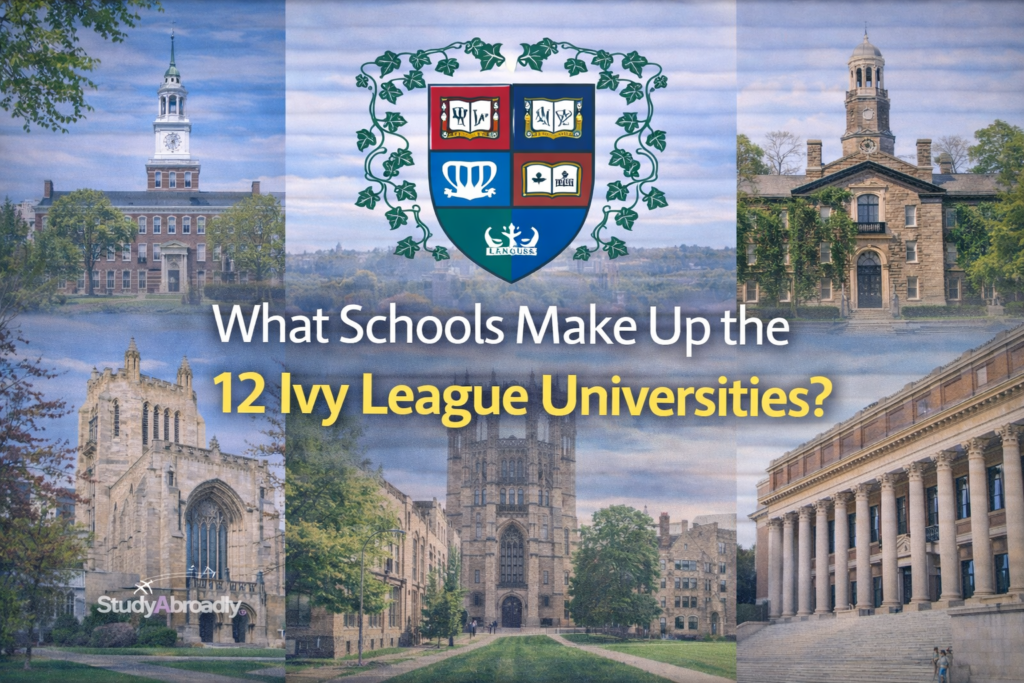
The phrase “Ivy League” carries a special kind of power in global higher education. It suggests excellence, prestige, selective admissions, and access to networks that can influence careers long after graduation. For Nigerian students researching American university options, understanding what the Ivy League truly is can help with realistic planning, smarter applications, and better decisions about where to commit time and money. The term has become so widely used that many people assume any top American university must be part of the Ivy League, which creates confusion about what schools actually belong to that group and why it exists in the first place.
The Ivy League is not simply an informal grouping of excellent universities or a subjective assessment of academic quality. It is a formally constituted athletic conference established in 1954, comprising exactly eight private research universities located in the Northeastern United States. These institutions share not only athletic conference membership but also colonial-era founding dates, commitment to liberal arts education alongside research excellence, highly selective admissions processes, and alumni networks occupying influential positions across business, government, academia, law, medicine, and other professional sectors globally.
Knowing exactly which eight schools make up the Ivy League and what each one is actually like is the first step toward a smart application strategy. This guide breaks down the unique personality, location, and academic vibe of every Ivy to help you decide where you will actually fit. We will also clear up some common myths and look at other world-class universities in the United States that are not technically part of the Ivy League even though they have massive prestige.
Harvard University
Harvard University in Cambridge, Massachusetts, founded in 1636, is America’s oldest higher education institution and arguably the world’s most famous university. Harvard consistently ranks first or second globally across major university rankings, maintaining unparalleled reputation for academic excellence, research output, and influential alumni.
Harvard’s undergraduate college enrolls approximately 6,700 students with acceptance rates typically below 4%, making it among the world’s most selective institutions. Graduate and professional schools including Harvard Law School, Harvard Business School, Harvard Medical School, and Harvard Kennedy School of Government maintain similarly elite status in their respective fields.
Harvard’s location in Cambridge, adjacent to Boston, provides access to one of America’s premier academic and cultural centers. The university’s extensive library system, research facilities, and faculty include numerous Nobel laureates, Pulitzer Prize winners, and field-defining scholars.
Yale University
Yale University in New Haven, Connecticut, founded in 1701, is America’s third-oldest institution and Harvard’s historical rival for undergraduate education excellence. Yale enrolls approximately 6,500 undergraduates with acceptance rates comparable to Harvard’s, typically 4% to 5%. Yale’s residential college system divides undergraduates into 14 residential communities, each with its own dining hall, library, and social spaces. This system creates intimate communities within the larger university, fostering close relationships among students and with faculty members.
Yale’s strengths extend across humanities, social sciences, sciences, and professional programs. Yale Law School consistently ranks as America’s top law school. Yale School of Drama, Yale School of Management, and other graduate programs maintain foremost positions in their fields. New Haven is smaller city than Boston or New York, providing collegial campus atmosphere while maintaining cultural institutions, restaurants, and urban amenities. The city’s size creates focused academic environment without major metropolitan distractions.
Princeton University
Princeton University in Princeton, New Jersey, founded in 1746, focuses almost exclusively on undergraduate education among Ivy League peers, with graduate programs concentrated in specific fields rather than professional schools like Harvard or Yale. Princeton enrolls approximately 5,400 undergraduates with acceptance rates around 4%. The university’s undergraduate focus means extensive resources dedicated to teaching, research opportunities for undergraduates, and close faculty-student relationships uncommon at larger research universities.
Princeton’s strengths include mathematics, physics, economics, politics, and engineering. The university has produced more Fields Medalists and Nobel laureates per capita than virtually any other institution. Princeton was the first major university to eliminate loans from financial aid packages, meaning aided students receive grants rather than debt obligations.
The town of Princeton provides suburban setting between New York and Philadelphia, accessible to both cities while maintaining quiet academic atmosphere. The campus is among America’s most beautiful, with Gothic architecture and extensive green spaces.

Columbia University
Columbia University in New York City, founded in 1754, provides Ivy League education in America’s largest, most dynamic metropolitan area. Columbia enrolls approximately 8,200 undergraduates with acceptance rates around 4% to 5%. Columbia’s location in Manhattan’s Morningside Heights neighborhood provides unparalleled access to cultural institutions, internship opportunities, professional networks, and urban experiences. Students can engage with UN headquarters, Wall Street financial firms, media companies, nonprofit organizations, and countless other institutions concentrated in New York.
Columbia’s strengths include humanities, social sciences, sciences, and professional programs including Columbia Law School, Columbia Business School, and Columbia Journalism School.
University of Pennsylvania
University of Pennsylvania in Philadelphia, founded in 1740, combines liberal arts education with professional program focus unusual among Ivy League peers. Penn enrolls approximately 10,000 undergraduates with acceptance rates around 6% to 7%. Penn’s Wharton School is the world’s top-ranked undergraduate business program, attracting students globally interested in business, finance, and entrepreneurship. Penn also maintains top-ranked programs in nursing, engineering, and liberal arts alongside prestigious graduate schools in law, medicine, and business.
The university’s pre-professional orientation means many students pursue business, finance, consulting, or healthcare careers. Penn’s Philadelphia location provides major city resources while maintaining campus cohesion and collegiate atmosphere.
Cornell University
Cornell University in Ithaca, New York, founded in 1865, is the Ivy League’s largest and youngest member. Cornell enrolls approximately 15,000 undergraduates across seven undergraduate colleges with acceptance rates around 7% to 8%. Compared to the other Ivies, Cornell is a completely different institution in terms of its size and how it is organized. Some colleges are privately endowed; others are publicly funded through New York State. This hybrid structure creates different kinds of academic environments within one university.
Cornell’s strengths extend across engineering, agriculture, hotel administration, industrial and labor relations, and traditional liberal arts. The university’s breadth exceeds other Ivies, providing programs in fields like veterinary medicine and architecture uncommon at peer institutions. Ithaca is small city in upstate New York’s Finger Lakes region, providing beautiful natural setting but relative isolation from major metropolitan areas. The campus atmosphere is intensely academic with students focused on rigorous coursework.
Brown University and Dartmouth College
Brown University in Providence, Rhode Island, founded in 1764, enrolls approximately 7,000 undergraduates with acceptance rates around 5%. Brown’s distinctive Open Curriculum allows students to design individualized programs without distribution requirements, appealing to self-directed learners.
Dartmouth College in Hanover, New Hampshire, founded in 1769, enrolls approximately 4,500 undergraduates, the Ivy League’s smallest undergraduate population. Dartmouth maintains undergraduate focus similar to Princeton, with intimate campus community and outdoor recreation opportunities in New Hampshire’s mountains.
Both institutions provide excellent liberal arts education with close faculty relationships and tight-knit communities. Their smaller sizes and locations in smaller cities create different experiences from urban Ivies like Columbia or Penn.
Universities Not in the Ivy League
Common misconception attributes Ivy League status to Stanford, MIT, Duke, Northwestern, and other prestigious universities. While these institutions match or exceed Ivy League schools in various rankings and measures, they are not Ivy League members because that designation refers specifically to the eight-school athletic conference.
Stanford and MIT particularly rival Ivies for prestige but are located outside the Northeast and weren’t part of the original athletic conference formation.
StudyAbroadly: Top Educational Consultants in Nigeria
StudyAbroadly stands out as one of Nigeria’s most trusted education consultancies for students targeting highly competitive US universities, including the Ivy League. The agency focuses on clarity, honesty, and strategy instead of fueling unrealistic expectations. Students receive a clear picture of their competitiveness through careful evaluation of grades, test scores, achievements, leadership experience, and overall academic profile. When a student is positioned for an Ivy League application, StudyAbroadly helps shape an application that reflects depth, individuality, and purpose across essays, activities, and recommendation planning. The guidance is grounded in how these universities actually make decisions, ensuring students present themselves in ways that resonate with admissions committees.
Support doesn’t stop at the eight Ivy League schools. StudyAbroadly helps students understand which institutions best match their academic goals, personality, and long-term aspirations. The consultancy also highlights exceptional non-Ivy universities that deliver world-class education, good outcomes, and sometimes even better fit for specific students. The approach is simple: help Nigerian students make informed choices, build compelling applications, and pursue universities where they can truly thrive.
The Ivy League isn’t just a label from US college brochures; it refers to a specific group of eight historic universities with shared traditions of academic rigor, selectivity, research influence, and powerful alumni networks. For Nigerian students comparing higher education options abroad, knowing which schools belong to this group brings clarity to a conversation often filled with assumptions and inflated expectations. The list itself is straightforward, but the path to choosing where to apply depends on personal goals, academic readiness, financial planning, and career direction. Ivy League status is impressive, though it isn’t the only route to an excellent American education or global opportunities, and the best choice is the one that aligns with individual aspirations and long term plans.