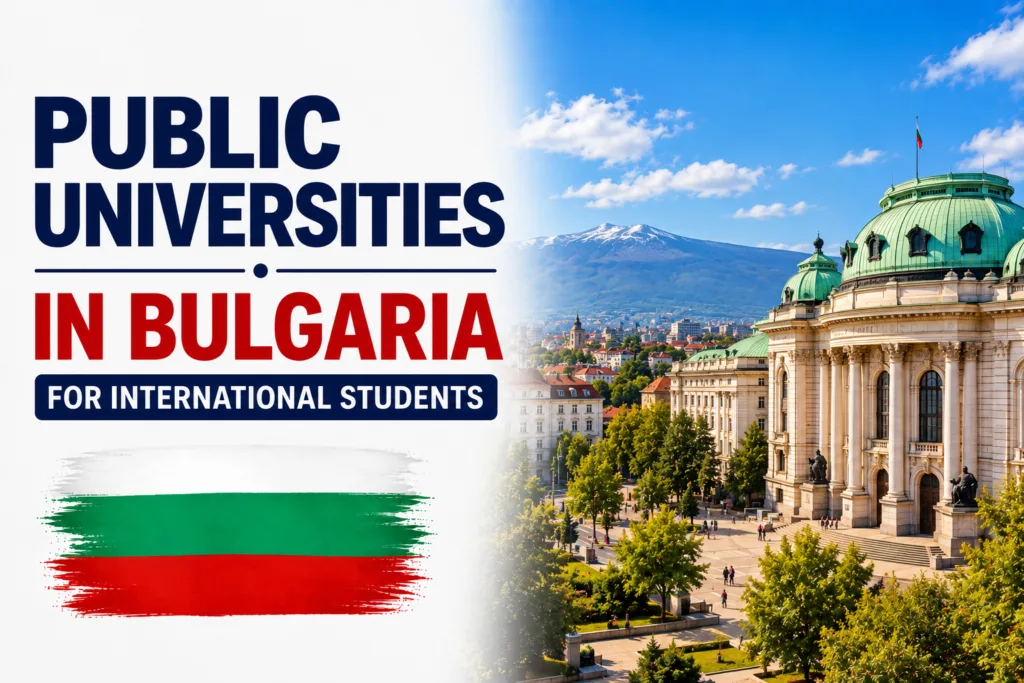
Bulgaria has several public universities where international students can study business, engineering, computing, economics, medicine and other subjects. For Nigerian and other non EU applicants, the country can be an attractive European study destination, with tuition fees at many general degree programmes falling within the €2,500 to €4,500 annual range. Medical courses usually cost more, particularly programmes taught in English.
The choice of university depends on the course you want to study, your previous qualifications and your budget. Some institutions have English taught degrees in specialist areas, while others have a wider selection of programmes delivered in Bulgarian. Below are five public universities in Bulgaria to consider, with details about their courses, fees and admission conditions.
1. Plovdiv University “Paisii Hilendarski”
Located in Plovdiv, Paisii Hilendarski University is a public institution with faculties covering humanities, natural sciences, economics, education and other academic fields. It is one of the universities international students can consider when planning to study in Bulgaria.
The university has courses in areas such as Business Administration, Software Technologies, English Philology, Psychology and Biological Sciences. However, applicants should pay close attention to the language of instruction. Many degree programmes are taught in Bulgarian, and international students who do not speak the language may need to complete preparatory language training before beginning their chosen course.
Tuition fees: Foreign students pay around €3,000 per year for full time degree programmes. The one year Bulgarian language preparatory course also costs €3,000.
Admission requirements: Applicants for bachelor’s degrees need a recognised secondary school certificate and relevant subject grades. The university sets a minimum average of 62% in the subjects used for admission. Master’s applicants need a recognised bachelor’s or master’s qualification, with additional conditions possible for certain courses.
2. University of Economics Varna
The University of Economics Varna is a public university with a focus on economics, business, management, tourism and computer science. Its location in Varna, one of Bulgaria’s major coastal cities, also gives students access to a city with business, tourism and maritime industries.
International students can study subjects such as International Business, Accounting, Business and Management, Finance and Computer Science. The university has English taught bachelor’s and master’s programmes, including International Business and Business and Management.
Tuition fees: Non EU students pay €1,350 per semester for bachelor’s programmes. Master’s tuition is €1,600 per semester, with some programmes lasting two semesters and others running for three or four semesters. This means bachelor’s tuition comes to €2,700 per year.
Admission requirements: Bachelor’s applicants need a secondary school certificate with relevant subject grades. Students applying for English taught programmes must demonstrate B2 English proficiency through an accepted certificate or the university’s language examination. Master’s applicants need a recognised bachelor’s degree.
3. Technical University of Sofia
Students interested in engineering, computing and technology can consider the Technical University of Sofia. It is one of Bulgaria’s established technical institutions, with academic areas covering computer systems, telecommunications, mechanical engineering, electrical engineering and industrial technology.
Some of its English taught programmes include Information Technologies in Transport at bachelor’s level and Computer Science and Engineering at master’s level. These courses are relevant to students planning careers in software, computing, transport technology and engineering.
Tuition fees: International students should budget around €3,000 to €4,000 per year for several bachelor’s and master’s programmes. The exact fee depends on the course and degree level. The university has a separate fee schedule for foreign students, so applicants should confirm the amount for their chosen programme.
Admission requirements: Applicants need the relevant secondary school or university qualification for their chosen degree. Engineering and computing courses may place particular attention on Mathematics and Physics grades. Students applying for English taught programmes should also provide evidence of English proficiency.
4. University of National and World Economy (UNWE)
The University of National and World Economy, located in Sofia, is a public institution known for economics, finance, business administration and social sciences. It is a suitable academic choice for students interested in careers in banking, management, international business, accounting and marketing.
Its academic areas include International Economic Relations, Finance and Accounting, Business Management and Marketing. International applicants can explore bachelor’s and master’s programmes through the university’s dedicated admissions section.
Tuition fees: International students can budget around €3,000 to €3,500 per year for bachelor’s programmes and €3,500 to €4,000 per year for master’s programmes. The final fee depends on the selected course.
Admission requirements: Bachelor’s applicants need a secondary school certificate and grades that meet the university’s admission conditions. Master’s applicants need a recognised bachelor’s degree. Students applying for English taught courses may need a B2 English certificate or to complete the university’s language assessment.
5. Sofia University “St. Kliment Ohridski”
Sofia University is one of Bulgaria’s oldest and best known public universities. It has faculties covering humanities, science, law, economics, education and other academic disciplines. Its location in the capital also gives students access to a wide range of academic, cultural and professional activities.
International students can explore courses in Computer Science, Business Administration, European Studies and other subjects. Medicine is another major area of interest, although it has separate admission tests and a much higher tuition cost than many general degree programmes.
Tuition fees: General bachelor’s and master’s programmes may cost around €3,300 to €4,500 per year. English taught Medicine is considerably more expensive, with tuition around €9,950 per year. Dental Medicine and Pharmacy also have separate fee arrangements.
Admission requirements: Bachelor’s applicants need a recognised secondary school qualification and grades that meet the conditions for their chosen programme. Some courses have entrance examinations. Applicants for Medicine should prepare for Biology and Chemistry assessments, while Computer Science admission may include Mathematics.
Related Article: 5 Cheapest Universities in Bulgaria for International Students
Admission Requirements for International Students in Bulgaria
International students applying to Bulgarian public universities need to meet the academic and document conditions set by their chosen institution. The exact requirements depend on the degree level and course, but most applicants should prepare the following:
- Secondary school certificate: Bachelor’s applicants need proof of completed secondary education that qualifies them for university admission in their home country.
- Academic transcripts: These should show subjects studied and grades received. Some universities pay particular attention to subjects related to the chosen course.
- University degree certificate: Master’s applicants need their bachelor’s degree certificate and academic transcripts.
- English language certificate: Applicants to English taught programmes may need B2 English proficiency. Accepted certificates and test scores depend on the university.
- Passport copy: A valid international passport is needed for admission and visa processing.
- Medical certificate: Some institutions ask for a recent medical fitness certificate as part of the application.
- Passport photographs: Applicants may need recent passport sized photographs.
- Legalised academic documents: Certificates and transcripts may need apostille certification or consular legalisation, followed by an official Bulgarian translation.
Applicants should confirm the document format and legalisation procedure with their university before sending original certificates or paying for translations. The rules depend on the country where the documents were issued.
How to Apply to Public Universities in Bulgaria
The application process begins with choosing a university and confirming that your academic background meets its admission conditions. These are the main steps international applicants can expect.
1. Choose your university and course
Start with a course that matches your previous education and career plans. Check the language of instruction, tuition fee and degree duration before beginning an application.
2. Prepare your academic documents
Gather your secondary school certificate, transcripts, passport and any additional documents requested by the university. Master’s applicants should also prepare their bachelor’s degree certificate and transcripts.
3. Complete legalisation and translation
Your academic documents may need to be authenticated in your home country and translated into Bulgarian. The exact process depends on the issuing country and the rules that apply to its documents.
4. Submit your application
Complete the university’s international student application and submit the required documents before the deadline. Some programmes admit students based on their academic records, while others include entrance examinations or language assessments.
5. Receive your admission decision
Once the university has reviewed your application, it will communicate the admission outcome and explain the next steps. International applicants may also need a certificate from the Bulgarian Ministry of Education and Science as part of the student visa process.
6. Apply for your student visa
Non EU students who need a visa for long term study in Bulgaria must apply for a Type D visa at the Bulgarian embassy or consulate responsible for their country of residence.
Application Deadlines and Living Costs in Bulgaria
Application dates depend on the university, course and admission route. Some institutions begin accepting applications in spring, while others keep applications open into the summer or early autumn. Preparatory language courses may have separate admission periods.
Living costs are another part of planning your studies. A student may spend around €350 to €600 per month, depending on the city, accommodation and personal spending habits. University dormitories can cost less than private rentals, although availability is not guaranteed for every international student.
A monthly budget should include:
- Accommodation and utility bills
- Food and groceries
- Public transport
- Mobile phone and internet
- Health insurance
- Personal expenses and study materials
Students moving to Sofia may need a larger accommodation budget than those living in smaller cities. It is best to arrange housing early and confirm the full cost before travelling.
Study in Bulgaria with StudyAbroadly
Studying in Bulgaria means looking at the course, tuition fees, admission conditions and living expenses before making your choice. Your academic qualifications, preferred subject, language ability and future career plans all play a part in deciding which institution is right for you. You also need to understand the admission process, prepare the correct documents and make financial arrangements for tuition and living expenses.
StudyAbroadly helps Nigerian students plan their education overseas through university and course guidance, admission support, document preparation and student visa application guidance. Our team can help you understand the steps involved in applying to universities abroad, organise the documents needed for your application and prepare for the transition to studying in another country.
Bulgaria has opportunities for international students interested in business, engineering, computing, economics, medicine and other academic fields. The best choice depends on the course you want to study, the qualifications you already hold and the amount you can spend on your education. Take time to review each programme and confirm its admission conditions before applying. With the right preparation and guidance from StudyAbroadly, you can move closer to your goal of earning a university degree in Bulgaria.