Cyprus is one of those study destinations that rewards the students who look past the obvious choices. It is a small island, but its higher education system punches well above what its size would suggest, offering EU-accredited degrees, English-taught programmes across a wide range of disciplines, and a Mediterranean quality of life that larger, more expensive European destinations cannot match. For international students weighing up where to build their academic credentials, Cyprus sits at an interesting intersection: European recognition, accessible fees, and a year-round climate that makes the day-to-day experience of student life considerably more pleasant than most of the continent.
The system itself is divided along geographical and political lines with direct implications for international applicants. The southern Republic of Cyprus operates as a full European Union member state, and its universities, both public and private, issue degrees recognised across the EU and beyond. The northern region operates a separate network of private and state-backed institutions that function on a different model entirely, relying heavily on automatic international scholarships that cut baseline tuition rates by 50% or more immediately upon admission. Both sides of the island offer legitimate, internationally recognised pathways, but the cost structures and admission processes are distinct enough that understanding both before you apply is essential.
Here are the 10 best universities in Cyprus for international students, covering both regions, both public and private institutions, and the full range of what the island has to offer academically.
Affordable Universities in Cyprus for International Students
Republic of Cyprus: Southern Institutions
University of Cyprus
The University of Cyprus is the highest-ranking public research institution on the island and the most academically prestigious option available to international applicants in the south. Annual tuition for non-EU students runs from €3,500 to €7,000, regulated at public university rates. Undergraduate programmes largely operate in Greek, but the institution has been expanding its catalogue of English-taught Master’s degrees steadily, offering world-class postgraduate training in a growing range of disciplines at fees that sit well below comparable EU public universities in Western Europe.
Cyprus University of Technology
Based in Limassol, the Cyprus University of Technology takes a distinctly applied approach to higher education, with a heavy focus on engineering, applied sciences, and digital media. Annual tuition runs from €3,500 to €6,000, and the university is particularly valued for its state-of-the-art laboratory infrastructure and the depth of its connections to Mediterranean technology firms. For international students targeting careers in tech or applied engineering within the European market, CUT offers a well-resourced entry point at a publicly regulated price.
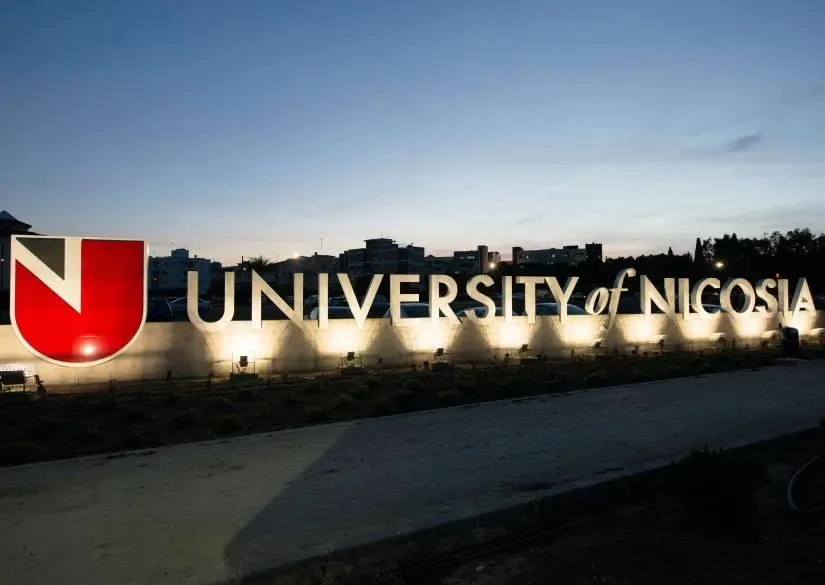
University of Nicosia
The largest private university in Cyprus, the University of Nicosia has built a global profile around two things: its pioneering work in blockchain and digital currency education, and its elite medical school programme operating in partnership with UK bodies. Annual tuition ranges from €9,000 to €15,000, with medical tracks scaling past €24,000. The university hosts a massive international student cohort and delivers a campus experience built around that diversity. For students in medicine, digital finance, or business, UNIC carries a level of international name recognition that most private Cypriot institutions are still building toward.
European University Cyprus
Part of the Galileo Global Education network, European University Cyprus charges between €8,500 and €13,000 per year and has built a particularly well-regarded reputation across computer science, business, and medical faculties. Its post-graduation employment placement rate across mainland Europe is notably high, which makes it an option worth examining carefully for students whose primary goal is securing a professional foothold in the EU job market after graduation.
Frederick University
With campuses in both Nicosia and Limassol, Frederick University sits at €7,500 to €9,500 per year and focuses on engineering, maritime studies, and social work. It offers merit-based financial aid packages that reduce costs for international applicants with solid academic records, which means the headline tuition figure is not necessarily what high-achieving students end up paying. For students in maritime or engineering disciplines specifically, Frederick’s sector focus and campus locations give it a relevance that broader institutions cannot always match.
Neapolis University Pafos
Located on Cyprus’s scenic western coast in Paphos, Neapolis is a rapidly expanding institution specialising in real estate evaluation, business administration, and psychological studies. Annual tuition runs from €7,000 to €9,000, and the campus delivers a community-driven atmosphere that differs noticeably from the larger, more anonymous environments of the Nicosia-based institutions. For students who want a smaller, more personally connected academic experience without sacrificing EU degree recognition, Neapolis is an underexamined option.
Northern Cyprus: A Different Model
Eastern Mediterranean University
EMU in Famagusta is one of the most respected state universities in northern Cyprus and consistently appears in international university rankings. After standard international discounts are applied, annual tuition sits between $4,000 and $5,500 USD. The university has built a particularly solid reputation in engineering, architecture, and international relations, and its graduate outcomes prove the rigour of those programmes. EMU draws students from across Asia, Africa, and the Middle East in large numbers, creating one of the most internationally diverse campus communities on the island.
Near East University
The largest campus community in northern Cyprus, Near East University charges between €2,800 and €5,600 per year for most programmes, with medical specialties starting from €12,000. Its clinical facilities are a standout feature: the university operates an expansive teaching hospital that functions as a primary training hub for international students in medicine, dentistry, and pharmacy. For students targeting health sciences specifically, the combination of accessible fees and hospital-based clinical training is a proposition that very few universities in this price bracket can offer.
Cyprus International University
CIU in Haspolat charges between €3,000 and €4,500 per year after its automatic 50% international scholarship is applied, and it takes an unusually transparent approach to pricing by bundling tuition, campus housing, and dining plans into package rates. That transparency makes budgeting considerably more straightforward than at institutions where accommodation and fees are quoted separately and reconciled later. The campus itself is modern and sustainably designed, and the student body spans over a hundred countries.
Girne American University
One of the oldest private institutions in northern Cyprus, Girne American University operates on an American-style credit curriculum and charges between €3,250 and €6,500 per year. Its global mobility tracks, built through sister campuses and international partner institutions, give students structured pathways to extend their academic experience beyond Cyprus if that is part of their plan. For students who want the flexibility of a credit-based system alongside international transfer options, GAU offers a framework that more conventionally structured European universities do not.
North Cyprus vs South Cyprus for International Students
The geographical split in Cyprus is not just political context. It has direct implications for international applicants.
Southern institutions issue EU-accredited degrees, which carry full recognition across all European Union member states and many countries beyond. If your post-graduation plans involve working or continuing your studies within the EU, southern Cyprus gives you that credential without question.
Northern institutions issue degrees accredited by Turkish higher education authorities and recognised by a growing but not universal list of countries. Before committing to a northern Cyprus institution, it is worth confirming that the degree will be recognised in the specific country or professional context you are targeting after graduation. For many students, particularly those planning careers in Turkey, the Middle East, or Africa, northern Cyprus institutions deliver excellent outcomes. For others, the recognition question is one that needs a clear answer before the application goes in.
StudyAbroadly: Best Study in Cyprus Agency
Applying to a university in Cyprus involves more moving parts than most students anticipate. Here is what we handle:
- Programme matching. We look at your qualifications, budget, target discipline, and post-graduation goals to identify which Cypriot institutions give your application the best return.
- North vs south guidance. We clarify the accreditation picture for your specific situation so you apply to institutions whose degrees work for what you are building toward.
- Full application management. Document preparation, portal submission, and admissions follow-up from the first step to the confirmed offer, handled entirely by us.
- Scholarship positioning. For northern Cyprus institutions offering automatic international scholarships, we make sure your application comes in through the right channel so that discount is applied from day one.
- Budget planning. Between tuition, accommodation packages, and living costs, Cyprus has a lot of variables. We help you build a number that reflects reality before you commit.
One island, two systems and a tuition range that runs from under €3,000 per year to over €24,000 for medical school. Cyprus offers more variety than its size suggests, and the right choice depends entirely on what you are studying, where you want to work afterward, and how much you are willing to spend to get there.