Norway spent years being one of the most searched study destinations in the world for a single reason: free tuition. International students from every continent were building application plans around the promise of attending a European university without paying a cent in fees. That era is over. Following a sweeping legislative reform, the Norwegian government has legally mandated that public universities charge full tuition to all international students from outside the EU, EEA, and Switzerland. The free ride, as it was, no longer exists.
What does exist, however, is something worth paying attention to. Norway’s public universities still operate within a structured, government-regulated fee system that keeps costs considerably more predictable than what you would find in the UK or the US. Fees are tiered by academic discipline, meaning humanities and social sciences sit at the lowest band, STEM programmes occupy the middle, and clinical medicine commands the highest rates. If you pick your programme and institution thoughtfully, Norway remains one of the more affordable high-quality study destinations in Northern Europe, and for one specific group of applicants, it is still completely free. More on that shortly.
Here are the 10 cheapest universities in Norway for international students in the 2026/2027 academic year, organised by price tier.
Cheapest Universities in Norway for International Students
Tier 1: The Most Affordable Entry Points
Norwegian University of Life Sciences (NMBU)
Located in Ås, a quiet town south of Oslo, NMBU currently offers the lowest entry-level tuition rates in the country for international students. Annual fees run from NOK 80,000 to NOK 125,000, roughly $7,300 to $11,500 USD, making it the most affordable starting point on this list. The university focuses on sustainability, global development, environmental economics, and food science, with several programmes taught entirely in English. For students whose academic interests align with those fields, the combination of low fees and specialist depth here is difficult to beat anywhere in Norway.
UiT The Arctic University of Norway
UiT operates from Tromsø, the northernmost university city in the world, and its tuition range runs from NOK 48,200 to NOK 185,400 annually, approximately $4,400 to $17,000 USD. The lower end of that range applies to specific specialised Master’s tracks, including Indigenous Studies, which sit at the cheapest price band of any programme at any Norwegian university. The location is remote by most students’ standards, but Tromsø is a functional, well-connected city with a cost of living that is lower than Oslo, and the academic environment is focused and research-driven.
Western Norway University of Applied Sciences (HVL)
HVL spreads across several campuses including Bergen and Haugesund, and its annual fees range from NOK 130,000 to NOK 210,000, around $12,000 to $19,200 USD. Its professional Bachelor’s tracks and humanities programmes sit at the tighter end of that range, making it one of the more accessible options for students targeting applied sciences or education. Bergen itself is one of Norway’s most liveable cities, with a student population large enough to make settling in as an international arrival relatively straightforward.
Tier 2: Competitive Mid-Range Public Universities
University of South-Eastern Norway (USN)
USN runs multiple regional campuses outside major metropolitan areas, which has a direct effect on both tuition and living costs. Annual fees sit between NOK 140,000 and NOK 260,000, approximately $12,900 to $24,000 USD, with clear tier-based pricing across disciplines. The university offers a wide range of English-taught programmes in business, technology, and health sciences, and its regional locations mean students are not paying Oslo or Bergen prices for accommodation and daily expenses on top of their tuition.
Norwegian University of Science and Technology (NTNU)
NTNU in Trondheim is Norway’s leading engineering and technology institution, and most of its standard STEM degrees are priced at around NOK 176,300 to NOK 205,600 per year, roughly $16,200 to $19,000 USD. What makes NTNU particularly interesting for cost-conscious students is an exception built into its own fee structure: specific Master’s programmes including Childhood Studies and Global Relations are discounted to approximately NOK 26,445 per year. That figure sits well below anything else available at a university of NTNU’s academic standing, and for students whose interests fall into those tracks, it represents one of the best value propositions in Norwegian higher education.
University of Oslo
As Norway’s oldest and highest-ranked university, UiO carries global recognition, and its baseline humanities and social science programmes are priced at the lower end of the capital’s offerings, starting from NOK 136,000 per year, around $12,500 USD. The upper end of the range reaches NOK 295,000 for specialised lab sciences. The Oslo location adds living costs that regional universities do not carry, but for students targeting programmes where UiO’s research reputation and alumni network add direct professional value, the investment is often justified.

Tier 3: Standard Public Research Hubs
University of Agder (UiA)
Situated on Norway’s southern coast, UiA is well regarded for its English-taught programmes in international development, business, and ICT. Annual fees run from NOK 140,000 to NOK 280,000, approximately $12,900 to $25,800 USD, with clear category pricing across faculties. The southern coastal location also means a milder climate than northern Norway, which is a practical consideration for students who are factoring in quality of life alongside academic options.
University of Bergen
Bergen is a major research institution with particular depth in humanities, social sciences, and natural sciences. Its humanities and business administration programmes represent the lowest cost tier at around NOK 175,000 per year, with natural sciences occupying the mid-to-high range up to NOK 300,000 annually. Bergen the city is one of Norway’s most characterful, surrounded by fjords and mountains, and it has a well-established international student community that makes the transition considerably smoother for new arrivals.
Oslo Metropolitan University (OsloMet)
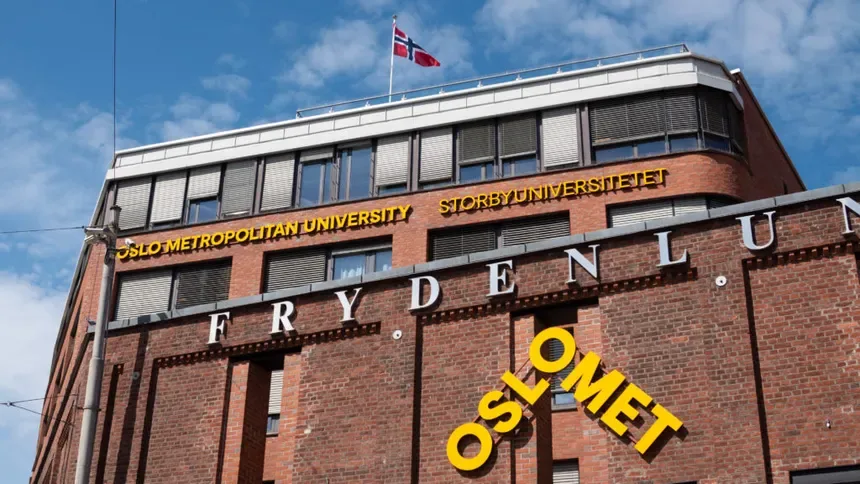
OsloMet focuses on applied social sciences, technology, and design, and its city-centre operations mean its baseline fees start higher than regional institutions, running from NOK 190,000 to NOK 320,000 per year, approximately $17,500 to $29,500 USD. What it offers in return is direct access to Oslo’s professional landscape, with industry connections across social work, nursing, education, and urban technology. For students whose career goals are tied to urban professional environments, the location carries its own form of value.
Nord University
Nord operates from northern hubs including Bodø and offers a focused academic environment built around biosciences, business, and blue ecology. Annual fees sit between NOK 150,000 and NOK 290,000, roughly $13,800 to $26,700 USD. The university has carved out a distinctive identity in ocean and coastal research that is difficult to find elsewhere in Europe at this price point, and its northern location keeps living costs comfortably below the national average.
Also Read: How Much Does it Really Cost to Study in Norway in 2026?
PhD Exception: Norway Is Still Free for Doctoral Students
Everything above applies to Bachelor’s and Master’s students. For PhD applicants, the calculation is entirely different.
Doctoral candidates at Norwegian public universities are legally classified as university employees, not students. That single distinction changes everything. PhD positions carry no tuition fees whatsoever, for any nationality, and instead come with a full professional salary typically ranging from NOK 480,000 to NOK 530,000 per year, alongside standard Norwegian workplace benefits including pension contributions and paid leave.
For high-achieving international graduates who qualify for a doctoral position, Norway is not just affordable. It pays you to be there. This is one of the most underleveraged facts in international higher education, and it is worth factoring into your long-term academic planning if a research career is part of your goals.
Study in Norway with StudyAbroadly
Norway’s university system is well organised, but navigating programme tiers, fee structures, and application deadlines from outside Europe takes more groundwork than most students anticipate.
Identifying where you fit.
Your academic background, budget ceiling, and target discipline all determine which of these universities and which fee tier makes the most sense for your profile. StudyAbroadly work through that mapping with you at the start, so you are putting your energy into applications with a real return.
Taking the application off your plate.
Norwegian universities have specific documentation expectations, and missing a requirement at submission stage can push your start date back by an entire academic year. We handle document preparation, portal submission, and admissions follow-up from start to confirmed offer.
PhD pathway guidance.
If your qualifications and goals point toward a doctoral position, that changes the entire financial picture. We help you identify open PhD positions that match your research background and walk you through what a competitive application looks like.
Free tuition in Norway is gone for most international students, but what remains is a structured, transparent fee system at universities that consistently deliver on research quality, campus facilities, and graduate outcomes. Pair that with the PhD salary pathway for eligible applicants, and Norway still holds a compelling case for students willing to plan their approach carefully.