Canada remains one of the top destinations for Nigerians, and Niagara College Canada (NC) is one institution consistently worth a spot at the top of your list. From its award-winning campuses to its direct link with Canada’s Post-Graduation Work Permit (PGWP) program, NC offers a clear, structured pathway from application to Canadian work authorization. This guide covers everything you need, from admission documents to cost of living figures, so you can plan your journey with full confidence.
About Niagara College Canada
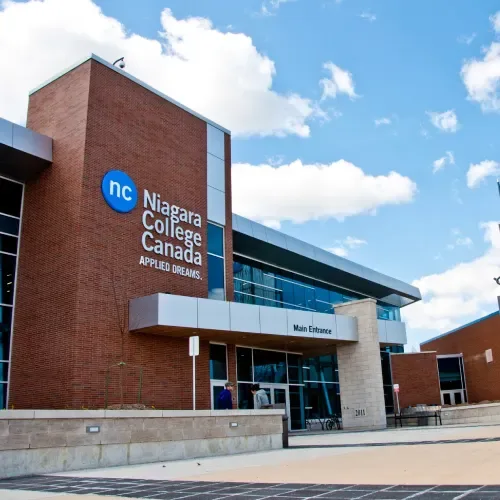
Niagara College Canada is a public College of Applied Arts and Technology established in 1967. It operates primarily within the Niagara Region of Southern Ontario and is one of Canada’s most recognized applied learning institutions.
Because NC is a designated public college, all its academic programs grant international graduates full access to Canada’s Post-Graduation Work Permit (PGWP) program. This is one of the biggest advantages for Nigerian students looking to transition from study to work in Canada.
QS Ranking
Niagara College is an applied technology college, not a traditional research university, so it does not hold a QS World University Ranking. QS rankings track degree-granting, research-focused universities exclusively.
NC’s prestige is better measured through its benchmarks:
- Consistently ranked among Canada’s top 10 research colleges by Research Infosource.
- Leads Ontario in student and graduate satisfaction benchmarks.
These metrics reflect what NC actually excels at: practical, career-focused education with solid student outcomes.
Why Choose Niagara College?
Campus Overview
Niagara College operates across three distinct campuses, each with its own character and focus area:
Welland Campus: The main hub of the college, this campus houses programs in:
- Technology and skilled trades
- Automotive engineering
- Media and communications
- Allied health and community safety
Daniel J. Patterson Campus (Niagara-on-the-Lake): Located in the heart of Canada’s wine country, this campus functions as a living laboratory for its unique programs. It houses the award-winning Teaching Winery, Teaching Brewery, Teaching Distillery, and commercial greenhouse spaces, making it one of the most unique campuses in the country.
Niagara College Toronto (NCT): A partnership campus in downtown Toronto offering core business and computer programming courses for students who prefer an urban environment.
Opportunities with a Niagara College Credential
Graduates benefit from:
- Solid employer networks across Southern Ontario and the Greater Toronto Area.
- Direct access to the PGWP, which allows you to work in Canada for up to three years after graduation.
- Co-op and field placement connections built into many programs, giving you a head start on professional experience before you graduate.
Fields of Study & Program Levels
Niagara College is an applied college, so its program structure is different from a traditional university. Here is the break down:
Undergraduate Programs
| Credential | Duration |
|---|---|
| Certificate | 1 year |
| Diploma | 2 years |
| Advanced Diploma | 3 years |
| Bachelor’s Degree (select programs) | 4 years |
Examples of 4-year Bachelor’s degrees include the Bachelor of Business Administration in Hospitality and the Bachelor of Science in Nursing.
Post-Graduate Programs
- Graduate Certificates (1 year) designed for university or Higher National Diploma (HND) graduates who want specialized, workplace-ready training
Doctorate Level
Niagara College does not offer Master’s degrees or PhD programs.
General Program Categories
- Advanced Manufacturing & Skilled Trades (Welding, Automotive, Electrical)
- Business, Management & International Commerce
- Culinary Arts, Wine, Beer & Spirits Sciences
- Environmental Technology and Agricultural Sciences
- Media, Computer Programming & Web Design
- Nursing, Allied Health & Community Studies
Tuition Fees, Deposits & Scholarships
Annual Tuition Fees (International Students)
Fees below include base tuition plus mandatory ancillary fees such as medical insurance and campus services.
| Program Type | Annual Cost (CAD) |
|---|---|
| Diplomas & Graduate Certificates | $16,000 to $19,500 |
| Bachelor’s Degree programs | $18,000 to $22,000 |
Admission Deposit
Once you receive your Offer of Admission (OOA), you must pay an initial tuition deposit to:
- Secure your seat in the program.
- Unlock your final Letter of Acceptance (LOA).
- Receive your Provincial Attestation Letter (PAL) for your visa application.
The deposit is usually equal to full first-semester fees, ranging from $8,000 to $10,000 CAD.
Scholarship Opportunities for Nigerian Students
Regional Global Scholar Scholarship
- Automatically awarded to incoming students from Africa.
- $2,000 CAD in the first term.
- An additional $1,000 CAD in the second term if you achieve an 80% academic average in term one.
Niagara College Degree Bursary
- For international students entering a 4-year Bachelor’s degree.
- Worth $2,500 to $20,000 CAD, distributed across semesters.
African Continent Scholarship (NCT Campus only)
- Specifically for African students studying at the Toronto campus.
- $3,000 CAD total ($1,500 in term one; $1,500 in term two, conditional on an 80% average).
Application Requirements for Nigerian Students
Application Fee
- $150 CAD (non-refundable)
For Undergraduate Applicants (Certificates & Diplomas)
- West African Senior School Certificate (WAEC) or National Examinations Council (NECO) results.
- A minimum grade of C6 in at least 5 core subjects relevant to your chosen program.
- English and Mathematics are standard mandatory subjects.
- You must provide your WAEC/NECO scratch card PIN and Serial Number so admissions officers can verify your results directly on the portal.
For Post-Graduate Applicants (Graduate Certificates)
- A scanned original university degree or HND certificate.
- Official academic transcripts showing graduation at First Class or Second Class (Upper or Lower) division.
English Language Proficiency
Nigeria is broadly recognized as an English-speaking country. However, some competitive programs may still review your WAEC English grade closely or prompt you for an additional check if your transcripts show inconsistencies.
Cost of Living in the Niagara Region
Living in the Niagara Region is slightly more affordable than downtown Toronto, but costs are still significant. Below is a realistic breakdown to help you plan:
| Expense Category | Estimated Monthly Cost (CAD) |
|---|---|
| Shared off-campus housing | $700 to $1,100 per month |
| On-campus residence (per academic year) | $8,500 to $11,000 |
| Food & groceries | $300 to $500 per month |
| Textbooks & supplies | $500 to $1,200 per term |
Total Annual Living Expense Estimate
Budget between $15,000 and $20,635 CAD per year for living costs. This figure aligns with what Canadian immigration officials expect to see as proof of financial self-sufficiency during your visa application.
Work-Study Opportunities
On-Campus Employment
The college operates the “Lead, Excel, Achieve, Develop” (LEAD) program alongside regular campus services. Part-time on-campus roles are available in:
- Campus bookstores.
- Computer labs.
- Administrative offices.
- Athletic facilities.
Off-Campus Employment
International students are permitted to:
- Work part-time off-campus during standard academic terms.
- Work full-time during scheduled seasonal breaks.
Co-op & Field Placements
Many Niagara programs include mandatory co-operative education (Co-op) terms, which are full-time, paid industrial work placements embedded within real companies. This structure lets you earn income while building professional connections in Canada before you even graduate.
Study in Canada with StudyAbroadly
Applying to a Canadian institution as a Nigerian student involves multiple moving parts: verifying your documents, meeting program-specific grade requirements, paying deposits at the right time, and putting together a solid visa application. Getting even one step wrong can delay your admission or jeopardize your study permit.
StudyAbroadly is a dedicated study abroad agency that simplifies this entire process for Nigerian students.
Here is how we support you:
- School selection: We help you identify the right program and campus at Niagara College, or match you to other top Canadian institutions that fit your academic background and career goals.
- Application support: We guide you through every step of the application, from gathering your WAEC/NECO verification details to preparing your academic transcripts for post-graduate entry.
- Scholarship guidance: We identify which scholarships you qualify for and help you meet the conditions to retain them across semesters.
- Visa & documentation: We prepare and review your study permit application, including your financial documents, Provincial Attestation Letter (PAL) process, and Statement of Purpose.
- Pre-departure support: Once your visa is approved, we help you plan housing, travel, and arrival in Canada so the transition is as smooth as possible.
If your goal is a 2-year diploma at the Welland Campus, a Graduate Certificate in Toronto, or a pathway into another Canadian institution entirely, Studyabroadly has the experience to get you there.
Frequently Asked Questions (FAQ)
Does Niagara College offer a Master’s degree or PhD?
No. NC does not offer any postgraduate research degrees. The highest level available is a 4-year Bachelor’s degree in select fields. Post-graduate study at NC takes the form of 1-year Graduate Certificates designed for working professionals.
Is a WAEC result enough to gain admission?
Yes, for undergraduate programs (certificates and diplomas). You will need a minimum of C6 in at least 5 relevant core subjects, including English and Mathematics. You must also provide your WAEC/NECO scratch card details for portal verification.
Do Nigerian students need to take an English proficiency test like IELTS?
Nigeria is recognized as an English-speaking country, so many Nigerian applicants are exempt from standard English tests. However, specific competitive programs may review your WAEC English grade carefully or request additional verification if your transcripts show inconsistencies.
What is the PGWP and how does it apply to Niagara College graduates?
The Post-Graduation Work Permit (PGWP) allows international graduates of designated Canadian institutions to work in Canada after graduation. Because Niagara College is a designated public college, its graduates are eligible to apply for the PGWP, which can be valid for up to three years depending on the length of your program.
Can I work while studying at Niagara College?
Yes. International students can work part-time off-campus during academic terms and full-time during scheduled breaks. Many programs also include paid co-op placements as part of the curriculum.
How much should I budget in total for one year at Niagara College?
For a diploma or graduate certificate program, plan for around $16,000 to $19,500 CAD in tuition fees plus $15,000 to $20,635 CAD in living costs. This brings the realistic annual total to between $31,000 and $40,000 CAD before scholarships.
What scholarships are available specifically for Nigerians?
As a Nigerian student from Africa, you automatically qualify for consideration under the Regional Global Scholar Scholarship ($2,000 CAD in term one, with a possible additional $1,000 CAD in term two). If you are studying at the NCT Toronto campus, the African Continent Scholarship offers $3,000 CAD spread across two terms. Students entering a 4-year Bachelor’s degree may also be eligible for the Niagara College Degree Bursary of up to $20,000 CAD.
How do I contact StudyAbroadly to begin my application?
You can reach out to StudyAbroadly through the contact page. Our counselors will assess your profile, recommend suitable programs, and walk you through the process at no hidden cost.