There is a version of studying in Italy that lives entirely in the imagination. Cobblestone piazzas, espresso between lectures, Renaissance architecture visible from classroom windows. That version is real, but it is not the main reason serious international students are choosing Italy in growing numbers. The main reason is this: Italy is home to some of the oldest, most research-intensive universities in the world, several of them rank impressively on global league tables, and the cost of attending them is a fraction of what comparable institutions charge in the UK, the US, or Australia.
What makes Italy particularly unusual among top study destinations is that its public universities do not charge flat international fees. Your tuition is not fixed the moment an admissions officer sees your passport. It is calculated based on your household’s financial situation, which means students from lower-income backgrounds can access world-ranked Italian universities for a few hundred euros per year. That is not a scholarship. It is simply how the system works.
This guide covers the 10 best universities in Italy for international students, what they offer, what they cost, and what you need to know before you apply.
Universities in Italy for International Students
Politecnico di Milano
Milan’s leading technical institution is the most internationally recognised university in Italy for engineering, architecture, and industrial design. Over 30% of its Master’s student body comes from outside Italy, and dozens of its specialised programmes are delivered entirely in English. For international students targeting careers in advanced manufacturing, product design, or technology, Politecnico di Milano sits at the top of the list.
University of Bologna
Bologna holds a distinction no other university in the world can claim: it is the oldest continuously operating university in the Western world, founded in 1088. That history has not made it complacent. It offers more than 100 degrees taught completely in English, with particular depth in law, humanities, artificial intelligence, and automotive engineering. Its international student community is one of the largest and most active in the country.
Sapienza University of Rome
By enrollment, Sapienza is one of the largest universities in Europe, and its academic range reflects that scale. It ranks exceptionally well globally for humanities and physical sciences, and its English-taught catalogue covers disciplines from Aerospace Engineering to Data Science to Classical Studies. Being based in Rome adds a dimension to student life that no other city in Italy can replicate.
University of Padua
Founded in 1222, Padua is one of the world’s great historic universities and remains a leading research institution today. Its English-medium programmes are particularly extensive in scientific and medical fields, including a fully English-taught Medicine and Surgery degree, which is rare among European public universities. Students drawn to astrophysics, psychology, or environmental sciences will find a serious academic home here.
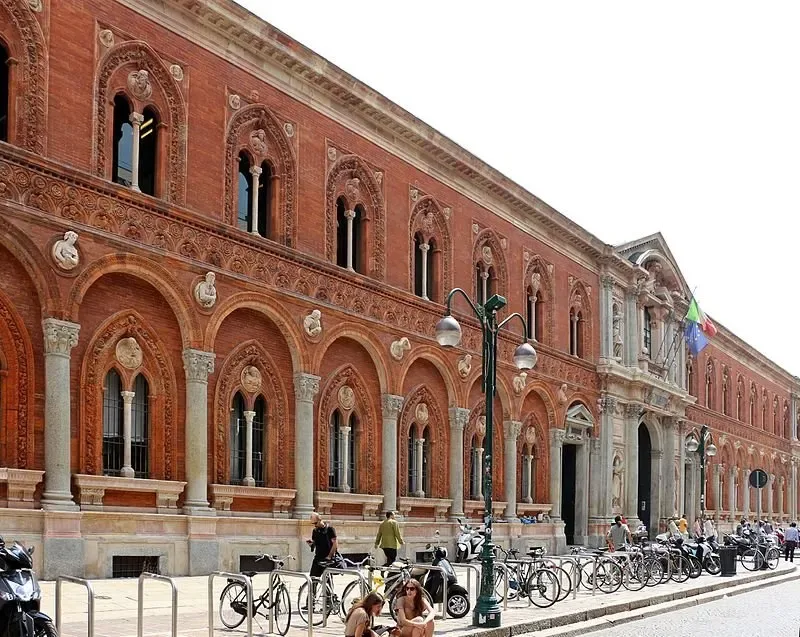
University of Milan
Sitting in Italy’s economic and financial capital, the University of Milan offers something the other institutions on this list cannot fully replicate: proximity to corporate Italy. Its English-taught postgraduate options are growing steadily, spanning biomolecular sciences, political science, medicine, and computer science. For students who want academic rigour alongside access to one of Europe’s most active business ecosystems, Milan La Statale is worth serious consideration.
Politecnico di Torino
Turin’s polytechnic has built its reputation on deep ties to the European automotive and manufacturing industries, and that relationship runs through the curriculum in very practical ways. It offers structured Bachelor’s and Master’s tracks entirely in English across automotive engineering, aerospace engineering, and sustainable architecture. Students who want industry exposure baked into their degree, tend to thrive here.
University of Pisa
Pisa is a historic institution with a research output that punches well above the size of the city it sits in. Its English-taught options cover computer science, business management, and nuclear engineering, and it draws international students who want a focused academic environment without the noise and cost of a major metropolitan campus. The city itself is compact, affordable, and easy to navigate.
University of Naples Federico II
One of the oldest continuously operating public institutions in the world, Federico II brings competitive tuition rates together with a growing English-taught science curriculum spanning structural engineering, biotechnology, and marine biology. Naples is one of the most culturally rich cities in Europe and one of the most affordable for students, which makes the overall package here particularly compelling for applicants watching their living costs.
Tor Vergata University of Rome
A modern public institution by Italian standards, Tor Vergata ranks highly for student satisfaction and has built a reputation for its economics, finance, big data engineering, and medicine programmes. Its English-taught schools attract a high percentage of international students, and its location in Rome gives graduates access to a job market and professional network that few European capitals can match.
Università Cattolica del Sacro Cuore
The only private institution on this list, Cattolica is the largest private university in Europe and operates across multiple Italian cities from its main Milan campus. Its orientation process is notably smooth for international arrivals, with a campus structure and support system that feels familiar to students coming from North American or British university environments. It specialises in business management, banking and finance, and international relations.
What Tuition Costs in Italy
Italian public university tuition works differently from almost every other major study destination, and understanding the system before you apply can save you a significant amount of money.
The ISEE Parificato System
Public universities do not charge flat fees based on your nationality. Instead, they use an income-based assessment called the ISEE Parificato, which translates roughly as the Equivalent Economic Situation Indicator. Before your first academic year, you submit your family’s official income tax returns and asset documents from your home country to a fiscal assistance centre in Italy. Those documents are assessed, and your tuition is calculated on a sliding scale based on the result.
If your declared household income falls below the threshold, which sits between €23,000 and €27,000 annually depending on the institution, your annual tuition can drop to as little as €156 to €500 per year. If you choose not to submit financial documents, or if your income exceeds the top bracket, you default to the institution’s maximum cap. Even at the maximum, Italian public university fees remain well below what comparable universities charge elsewhere.
Maximum Fee Caps at Public Universities
Politecnico di Milano and the University of Milan sit at the higher end of the public range, with maximum annual caps between €3,800 and €3,900. The University of Bologna and University of Padua cap out at approximately €3,000 to €3,200 per year. Sapienza offers some of the most affordable ceilings on the list, with maximum fees ranging from €1,600 to €2,900 depending on the programme. Politecnico di Torino, Pisa, Naples Federico II, and Tor Vergata all generally fall between €2,000 and €3,000 per year at their maximum.
How Tuition Payments Work
Tuition is divided into three installments spread across the academic calendar. Your first installment is a fixed administrative fee of approximately €157, covering regional student taxes and official stamp duties. This is what secures your enrollment slot. The remaining installments follow once your ISEE assessment is processed and your personalised rate is confirmed.
Università Cattolica
Cattolica operates outside the public ISEE system entirely. Its international tuition starts at around €6,000 per year for business and humanities programmes. High-demand specialisations like Medicine can reach up to €18,000 per year. The trade-off is a more structured international student experience and a campus environment built with non-Italian students explicitly in mind.
StudyAbroadly: Study in Italy for International Students
Italy’s universities are accessible, but the application process involves more steps than most students expect, and the ISEE income assessment alone can be confusing to handle without guidance.
Matching you to the right institution.
Your field of study, budget, and preferred city all shape which Italian university makes the most sense for your profile. We work through those factors with you at the start, so you are spending time on applications that are actually worth pursuing.
Managing your application end to end.
From organising your academic documents to submitting through the correct university portal and following up with admissions teams, we handle the full process. You stay informed without having to chase paperwork across time zones.
Walking you through the ISEE process.
The income assessment system is one of the most misunderstood parts of studying in Italy, and getting it wrong can mean paying the maximum cap when you qualify for a significantly lower rate. We guide you through exactly what documents you need, where to submit them, and how to make sure your tuition reflects your actual financial situation.
Italy offers something rare in international higher education: world-ranked universities, centuries of academic tradition, and a tuition system designed to make cost less of a barrier, not more. If you are ready to explore what studying in Italy looks like for your specific profile, Studyabroadly is here to help you move from research to offer letter.