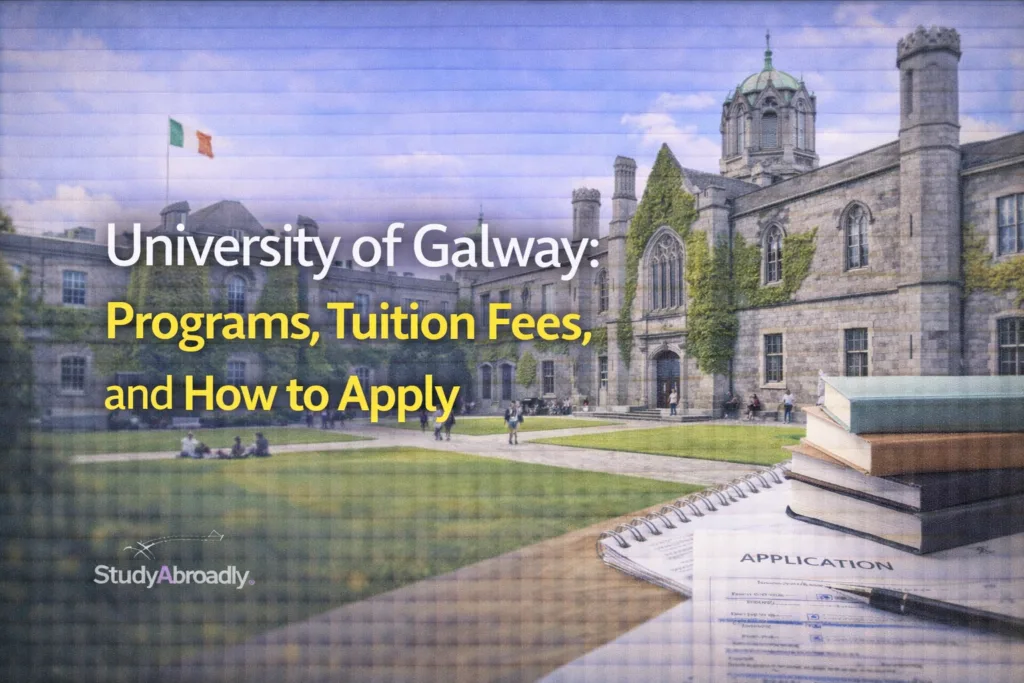
The University of Galway stands out as one of Ireland’s most respected public universities, known for academic quality, research depth, and a welcoming student environment. Located in a lively coastal city, the institution blends rigorous teaching with real world relevance across fields such as business, engineering, health sciences, computer science, and the arts. Nigerian students often find Galway appealing because it delivers a balanced study experience, a lower cost of living compared to larger Irish cities, and degrees that carry global recognition.
Clear information plays a major role when planning international study, especially around available programs, tuition fees, and application steps. Many students want to know which courses fit their background, how much to budget realistically, and what the admission process looks like from start to finish. A well structured overview of the University of Galway helps turn curiosity into confident planning, allowing students and families to assess options, timelines, and costs with fewer surprises along the way.
Programs Offered at the University of Galway
The University of Galway hosts over 150 courses for international students across various academic disciplines, organized within five colleges. This breadth ensures students can find programs matching their interests and career aspirations.
Arts and Social Sciences
Available Programs:
- History
- Psychology
- Drama
- Journalism
These humanities and social science programs focus on critical thinking, research capabilities, and communication skills essential for careers in media, education, public service, and cultural sectors.
Business, Public Policy and Law
Available Programs:
- Accounting
- Global Experience Commerce
- Criminology
Business and law programs prepare graduates for professional practice in finance, international commerce, and legal systems, with particular emphasis on global perspectives and practical application.
Science and Engineering
Available Programs:
- Biomedical Science
- Computer Science (AI)
- Energy Systems Engineering
- Biotechnology
- Marine Science
- Environmental Science
Science and engineering disciplines address contemporary technological challenges and emerging fields, from artificial intelligence to sustainable energy solutions, preparing graduates for high-demand technical careers.
Medicine, Nursing and Health Sciences
Available Programs:
- Nursing & Midwifery
- Occupational Therapy
- Medicine (MB, BCh, BAO)
Health professions programs combine rigorous academic study with extensive clinical training, producing graduates ready for professional registration and healthcare practice across various specializations.
University of Galway Tuition Fees for 2026/27 Academic Year
Fee Structure Components
University of Galway fees are made up of three elements: tuition, student contribution (applicable to EU students only), and a mandatory student levy of approximately €140 covering student services and facilities.
EU Resident Fees
Undergraduate: €5,738 to €8,208 annually
Postgraduate: €5,890 to €16,300+ annually
EU students may qualify for Free Fees Initiative, which covers tuition costs, leaving only the Student Contribution of €2,500 and the Student Levy as out-of-pocket expenses. This substantial support makes Irish education exceptionally affordable for EU nationals.
Non-EU/International Student Fees
Undergraduate: €19,390 to €55,140 annually
Postgraduate: €14,640 to €33,140 annually
International student fees depend mostly on program intensity and resource requirements. Arts and social science programs generally fall into the lower end of fee ranges, while medicine, engineering, and laboratory-intensive sciences carry higher fees reflecting equipment, facility, and supervision costs.
The medicine program (MB, BCh, BAO) stands as the highest-cost option due to extensive clinical training, small cohort sizes, and hospital placement coordination. Nigerian students should carefully evaluate total program costs when considering medical education at Galway. Postgraduate fees show similar variation, with taught Master’s programs in business and humanities remaining more affordable than research-intensive or clinical postgraduate qualifications.
University of Galway Application Process
Undergraduate Applications for EU/UK Students
Application Platform: Central Applications Office (CAO)
Deadlines:
- Normal Deadline: February 1, 2026
- Late Application: May 1, 2026
EU and UK undergraduate applicants must submit applications through Ireland’s centralized CAO system, which processes applications for all Irish universities simultaneously. This streamlined approach allows students to list multiple program preferences in priority order, with offers allocated based on academic performance and preference rankings.
The February 1 deadline is the standard submission date, though late applications remain possible until May 1 with additional fees. Early submission is advisable for competitive programs and scholarship consideration.
Undergraduate Applications for Non-EU Students
Application Platform: University of Galway International Portal
Intake Period: Most programs commence in September; applications open in October
Nigerian and other international undergraduate applicants apply directly through the university’s dedicated international portal rather than the CAO system. This separate process accommodates different qualification systems, credential evaluation timelines, and visa processing requirements. Applications opening in October for the following September intake provide substantial lead time for document preparation, English language testing, and financial planning.
Postgraduate Applications
Application Platform: Postgraduate Applications portal
Deadlines: Taught programs often operate rolling admissions, though early application by February or April is recommended
Most taught and research postgraduate programs use the university’s postgraduate portal for application submission. Rolling admissions mean applications are reviewed continuously as received, with decisions issued throughout the cycle until programs reach capacity. Even with rolling systems, early application by February or April brings significant advantages including first consideration for limited places, priority scholarship assessment, and adequate time for visa processing. Popular programs may close before official deadlines once filled.
Required Application Documents
Standard Requirements:
- Academic transcripts documenting all previous university-level study
- Personal Statement (maximum 800 words) articulating motivation, relevant experience, and career objectives
- Two letters of recommendation from academic or professional referees familiar with your capabilities
- English proficiency scores demonstrating language competence
English Language Requirements:
- IELTS: 6.5 overall
- TOEFL: 88 overall
Alternative English tests may be accepted; applicants should verify current requirements through the university’s official website. Some programs establish higher language thresholds, particularly those involving clinical practice or extensive writing components.
The 800-word personal statement needs concise, focused writing that efficiently communicates your strengths and suitability. Quality carries more weight than length; thorough editing and multiple drafts produce more compelling statements than rushed, verbose submissions. Recommendation letters should address specific competencies relevant to your chosen program.
Additional Considerations for Nigerian Students
Credential Evaluation
Nigerian degree certificates and transcripts undergo evaluation to establish equivalency with Irish qualifications. Students should make sure their institutions are recognized by Irish authorities and be prepared for potential assessment delays during peak application periods.
Financial Documentation
Student visa applications demand proof of financial capacity covering tuition and living expenses. Nigerian applicants should prepare bank statements, sponsorship letters, or scholarship confirmation well in advance of visa submission.
Living Costs
Beyond tuition, students must budget for accommodation, food, transport, and personal expenses. Galway’s cost of living, while lower than Dublin, still amounts to significant expenditure. Realistic budgeting prevents financial difficulties during study.
StudyAbroadly: Best Ireland Study Abroad Consultant
Clear guidance makes a real difference during the University of Galway application process, especially when multiple requirements and deadlines are involved. StudyAbroadly, an experienced study abroad agency in Nigeria, supports students at every stage, from choosing suitable programs to completing visa steps and preparing for departure. This kind of support helps students move through the process with clarity, confidence, and way more certainty.
Familiarity with Galway’s admission standards allows StudyAbroadly to provide targeted support that goes beyond general advice. Careful attention is given to personal statements, document preparation, English test timelines, and financial records needed for Irish visa approval. Honest guidance on course fit, admission chances, and realistic costs helps students make informed decisions while reducing the stress that often comes with international applications.
The University of Galway brings together respected academic standards, an impressive mix of programs, and Ireland’s post study work options in a way that appeals to many Nigerian students looking toward Europe. Careful consideration of full study costs, course content, and how each program fits long term career plans helps students make confident choices. Ireland’s expanding economy, English taught system, and welcoming student community further position Galway as a realistic and rewarding option for those planning an international education journey.